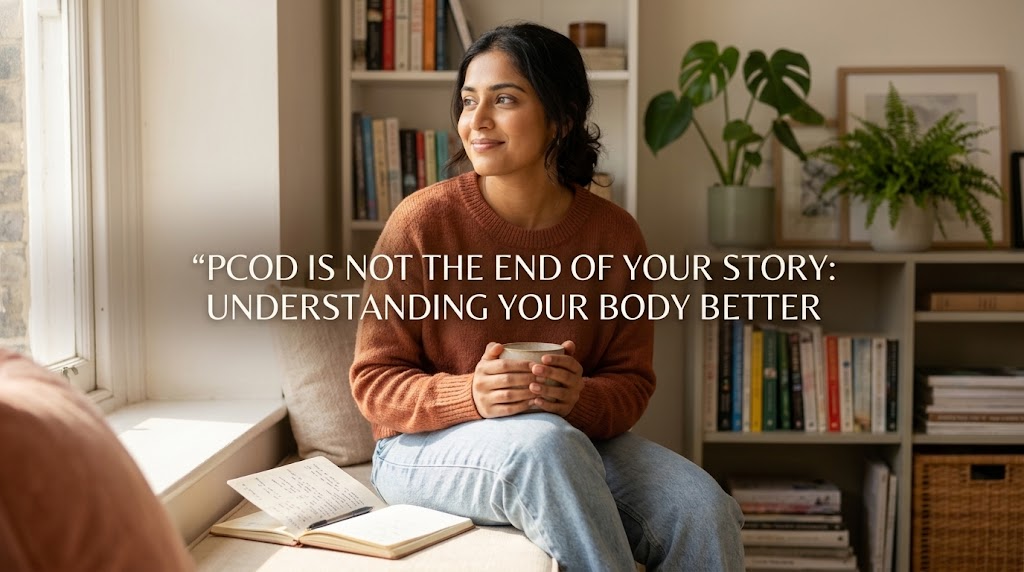
PCOD is not the end of your story. It’s the beginning of understanding your body better. We often blame our changing lifestyle or eating habits for the rise in PCOD cases. While they do play a role, they’re not the whole story.
What we don’t talk about enough is awareness. Many women aren’t taught to recognize the signals their bodies are trying to send. Irregular periods, acne, unexplained weight changes, fatigue, mood swings, or poor sleep are often ignored until they begin affecting everyday life.
A PCOD diagnosis can feel overwhelming, but it isn’t the end of your journey. It’s an opportunity to pause, understand your body, and make choices that support your health.
Medication is important and should always be taken as advised by your doctor. But healing goes beyond medicines. You don’t need expensive superfoods or complicated diets. Our everyday homemade Indian meals, regular movement, quality sleep, and consistency can make a meaningful difference.
And then there’s stress. People often say, “Manage your stress.” But for many women, it’s not that simple. Between work, family, studies, and countless responsibilities, stress doesn’t disappear overnight.
Instead of trying to eliminate it, start by taking one small step each day. Go for a walk. Write a page in your journal. Listen to your favourite music. Read a few pages of a book. Spend a few quiet moments doing something that genuinely makes you happy.
Small habits, repeated every day, create lasting change. Don’t let PCOD define you as a limitation. Instead, view it as a reminder to prioritize your well-being.
#PCOD #PCOS #WomensHealth #Hormonal Health #Preventive Healthcare #HealthyLifestyle #HealthAwareness